
WellFest 2026: live production at Queenstown's wellness festival
- Event
- WellFest 2026
- Where
- WellSpace, beside the Kawarau River, Queenstown
- What we did
- Live multi-camera production, festival coverage and event photography
- Scale
- Three days, 350+ attendees, four cameras, a crew of four
A festival that does not sit on one stage
WellFest has run on the WellSpace grounds beside the Kawarau River since 2022, and it is not a simple festival to film. The programme spreads across the whole site: live music and DJs, workshops, yoga and meditation, ecstatic dance, saunas and river swims, a market, a family programme and camping on site. More than 350 people came through over the three days of the 2026 festival.
That shape decided the production. One camera at the main stage would have caught the headline acts and missed most of what people actually came for. So we planned two jobs running side by side: a live multi-camera production on the main stage, and a roaming crew documenting everything else.
Planned on paper first
Before the gates opened we sent the organisers a written video production plan, and we built the coverage around their programme schedule. That told the crew which sessions needed the stage cameras, which needed the roaming camera, and where the windows were for resets and battery swaps. On a three-day event, the schedule is the shot list.
The main stage: four cameras, switched live
The main stage ran on four cameras: three locked off and one roaming. Wireless video transmitters carried the feeds back to an ATEM Mini Pro ISO, which cut the live stream as it happened.
The ISO part matters more than it sounds. As well as the live mix, the switcher recorded every camera separately, so no decision made live was final. In the edit we could recut a performance from the clean angles, fix a late switch, or use a close-up the live mix never showed. The live stream and a properly edited festival film came out of the same three days, without filming anything twice.
Who ran it
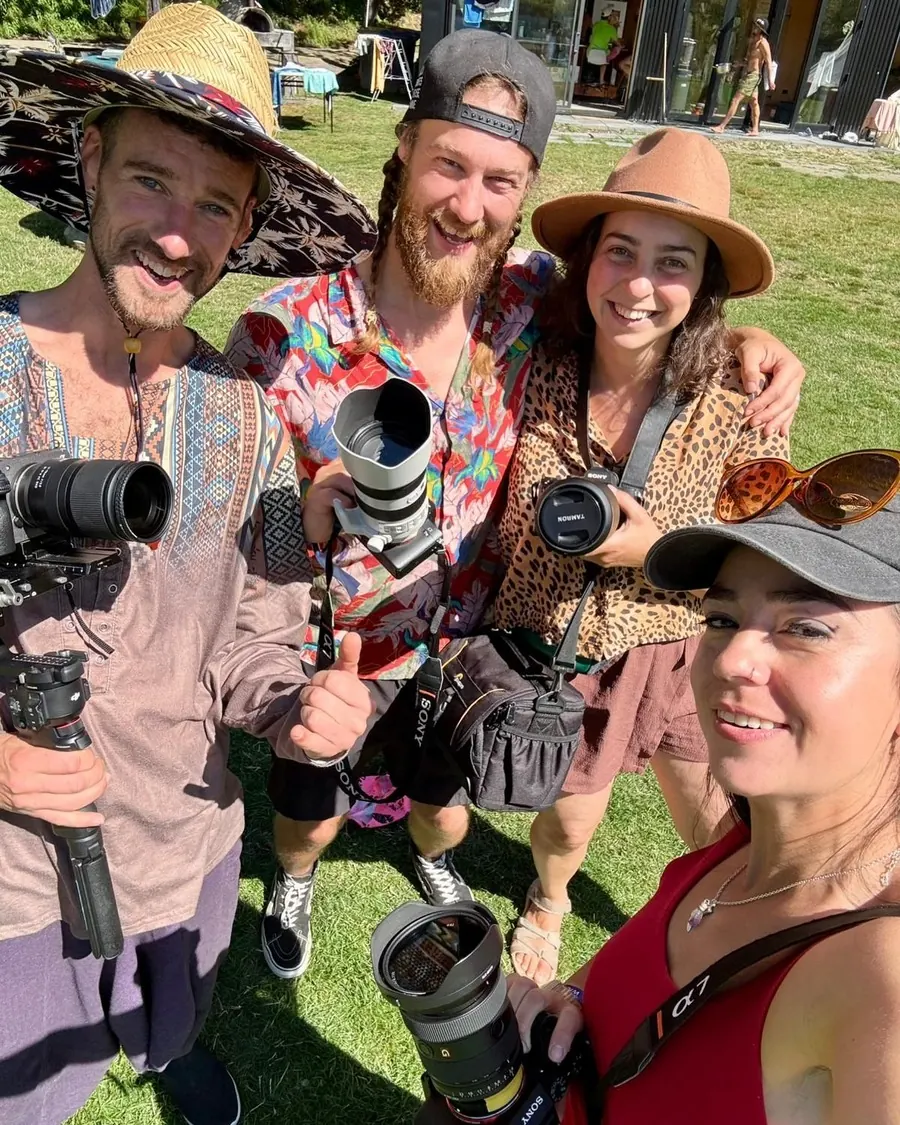
Toni was Technical Director on the switcher for all three days. Luciana and Leda operated cameras and covered the grounds. With the four of us spread across the site we stayed in contact the whole time, so when something worth filming happened away from the stage, someone could get to it.
Away from the stage
Much of what makes a festival film is not on the programme. Between sets the roaming camera worked the rest of the site: a facilitator in full flow at a workshop, strangers finding common ground, a musician in the quiet minute before walking on. Those are the shots that make a festival look like a place you want to be, rather than a list of acts.
We shot event photography alongside the video across all three days, so the festival had stills for its website and socials from the same crew and the same brief.
Still working a year later
The 2026 coverage went on to become the early bird promotion for WellFest 2027, which runs from 19 to 21 February 2027. Good festival footage keeps selling the next edition long after the tents come down.
If you are running a festival
- Send the crew your schedule early. The coverage plan comes straight out of it.
- Decide what is live and what is documented. Stream the stage and film the rest for the edit. Trying to stream everything usually means covering nothing well.
- Record every camera, not just the live mix. It adds very little on the day and gives you a far better film afterwards.
- Book the photos with the video. One crew, one brief, and the stills match the film.
Our event video checklist goes into more detail, and the services themselves are on our event videography and event live streaming pages. For live sport, see how we ran the ice hockey streams at the Queenstown Ice Arena.