
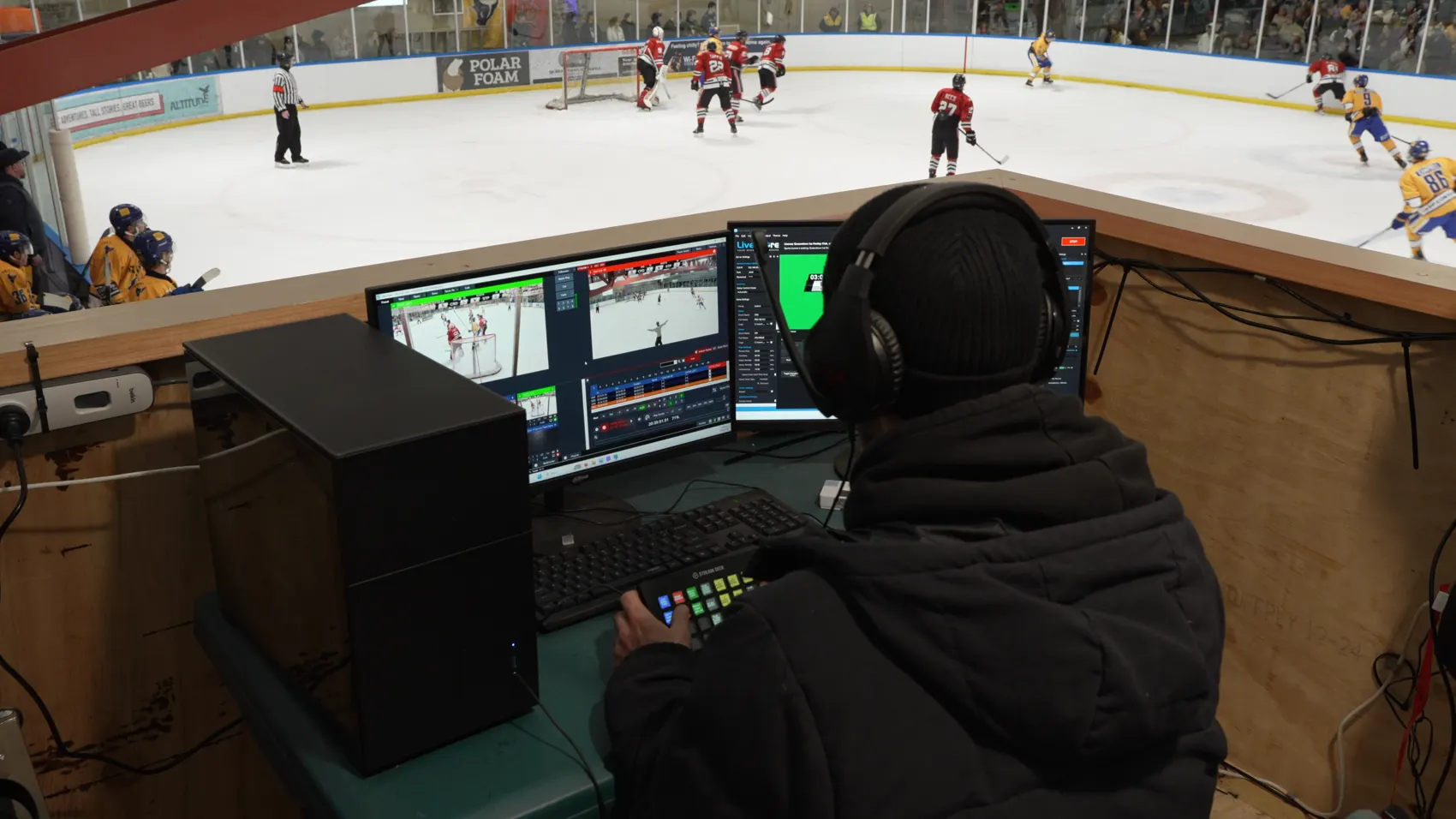
Directing live ice hockey from the Queenstown Ice Arena
- Client
- Ice Hockey New Zealand, for Queenstown home games
- Teams
- Wakatipu Wild (women's league) and SkyCity Stampede
- Where
- Queenstown Ice Arena
- What we did
- Directed and switched the live streams in vMix
- Season
- May to August 2026, including the NZIHL semi-finals
How it started
In early May 2026 the Queenstown Ice Hockey Club needed someone to run its livestream on game nights, and a referral sent them our way. We went down to the rink that evening to see the setup and meet the team, and Ice Hockey New Zealand's broadcast lead walked us through the system over the phone. By the end of the month the Wakatipu Wild had us on the livestream crew for the rest of their season, and the SkyCity Stampede's home games followed.
Someone else's system, our night
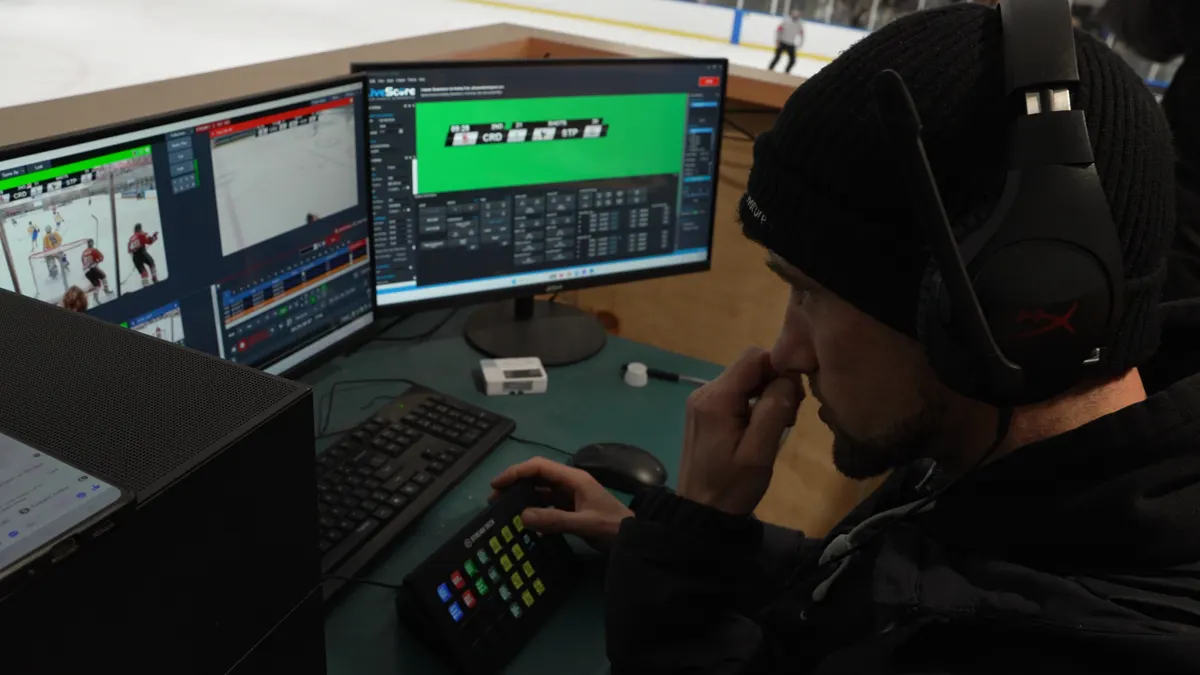
This was not our kit, and that is the point of the job. Ice Hockey New Zealand runs the broadcasts for its leagues: a main camera on a platform above the scorebox, fixed cameras around the rink, and a production PC in the stand feeding the league's YouTube channel. Late in May the league moved the whole production from OBS to vMix, because it needed multi-camera replays it could rely on. Once the stream is up, the show is driven from a Stream Deck.
Our job was to run it on the night. That meant being set and ready by 6:45pm for a 7pm puck drop, then directing three 20-minute periods: cutting between cameras, rolling replays, keeping the score graphics right, and taking the stream into two 15-minute intermissions and back out again without the viewers at home seeing the join. We had run vMix plenty before, so the move from OBS was no drama.
Problems you only find on game night
Live sport finds the weak points in any system, and a cold rink is hard on equipment. Three came up this season:
- A camera that froze after every intermission. The main camera sat idle for 15 to 17 minutes while the intermission video played, and its input froze when the game came back. A reset cleared it, so the league added an automatic vMix trigger that resets that input as the intermission video ends, and we tried a replacement cable and the camera's power-saving settings on site.
- A loose cable, all season. The Queenstown camera kept dropping out on one bad cable. Before the semi-finals we brought in new cabling and fitted it with the league.
- Dropped frames on several inputs at once. When frames dropped across more than one camera at the same moment, that pointed at the production PC rather than any one camera, and the logs were checked to rule out a settings change.
None of these is dramatic on its own. Together they are the difference between a stream that looks like broadcast and one that viewers give up on, and you only learn them by being at the desk week after week.
Semi-final weekend
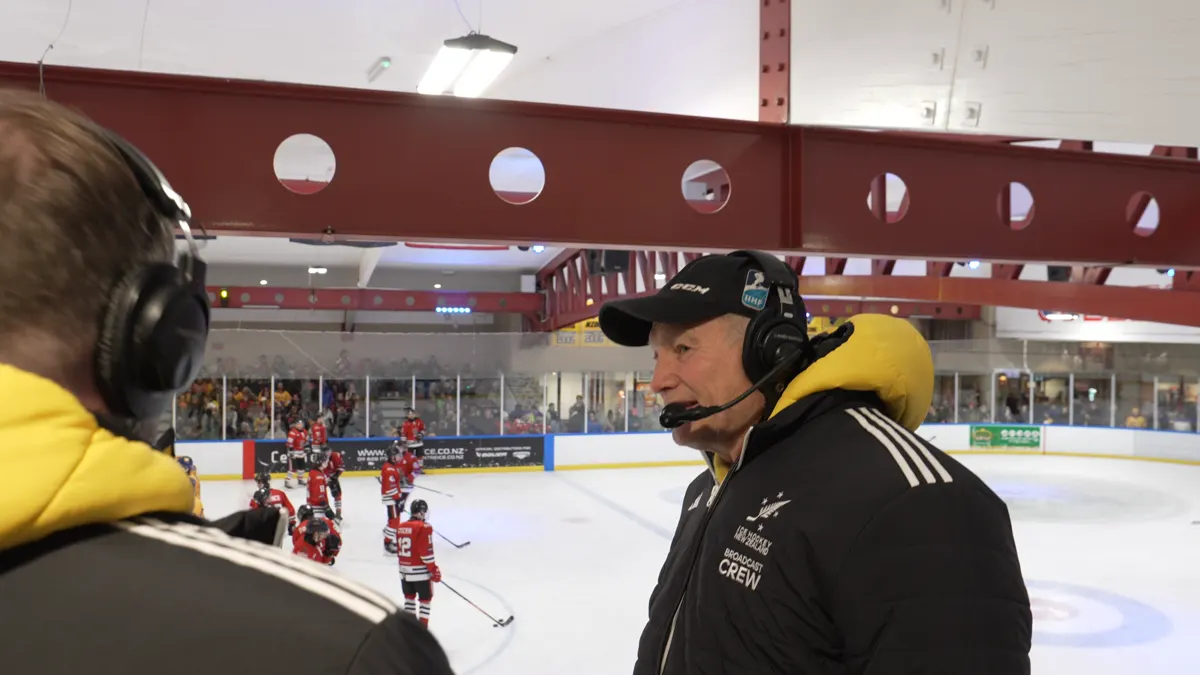
When Queenstown hosted the New Zealand Ice Hockey League semi-finals in August, the SkyCity Stampede against the Red Devils over a Friday and a Saturday night, Ice Hockey New Zealand asked us to run the directing side of both broadcasts. The rest of the crew was local: two commentators and a camera operator, working from an information pack the league put together with team rosters, name pronunciations and stats.
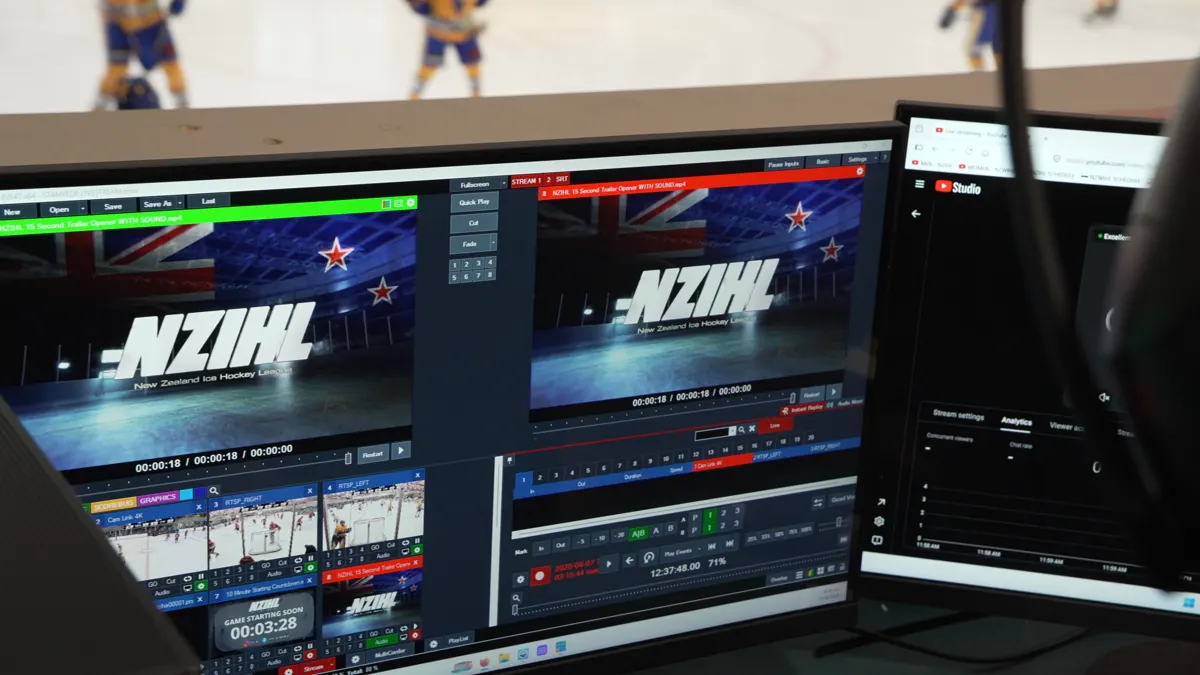
We filmed behind the scenes across the weekend too, which is where the photos on this page come from.
What the league said
“Thank you to Dave and FanCast Productions for their assistance in producing our New Zealand Ice Hockey League and New Zealand Women's Ice Hockey League games. Dave's work with our live broadcast productions keeps our livestreams running smoothly for our national and international audiences.”
If you already own the gear
Plenty of venues, clubs and organisations already have streaming kit: a camera on a mount, a PC running vMix or OBS, a channel to stream to. What they are short of is someone who can run it properly on the night and sort it out when it misbehaves. We can direct a system you already own, or bring a full multi-camera production of our own, as we did at WellFest. How we plan a stream is on our event live streaming page, and the rest of our event work is on event videography.